
I want to touch on three points and look at how they connect and affect each other.
Geopolitics
It’s clear by now, especially if you’re outside the US, that there is — at least for US-made closed models — an AI kill switch. On June 12th, this materialized with the US government’s ban on Fable.
If I were part of an organization dependent on US-made frontier models, I would certainly have paid attention and taken the ban as a wake-up call. Setting aside the citizenship-test issue, which I’ll decline to comment on, the rising misalignment in international politics makes this ban even more relevant for non-US users and organizations.
And if you are using these models today, how do you react? Do you have fallback mechanisms? Are they tested and maintained? Do they produce usable, consistent results? What matters is how you design and test your system, not what you assume will happen.
As a disclaimer: I’m biased, since I’ve worked in risk throughout my career, and I tend to see risk everywhere and try to preempt negative outcomes.
Another point I haven’t seen discussed much is how the geopolitical landscape will affect talent acquisition and retention. If policymakers tomorrow passed a law requiring residency or citizenship to work on frontier models in the US, what would happen? Would people leave? Would this push other countries to scout for talent and investment more aggressively?
Closed Model vs. Open Model
Given all this, should you consider using an open model instead? There are, of course, several considerations, including cost, performance, privacy, and GRC (Governance, Risk, and Compliance) integration; the latter is especially true for highly regulated industries like Finance, Insurance, and Healthcare. The first question to ask is probably: do I actually need the absolute frontier model for workflow execution, coding, or classification? How good are newer open models like Kimi K3 or GLM 5.2? Let’s look at data available on https://artificialanalysis.ai/models/kimi-k3
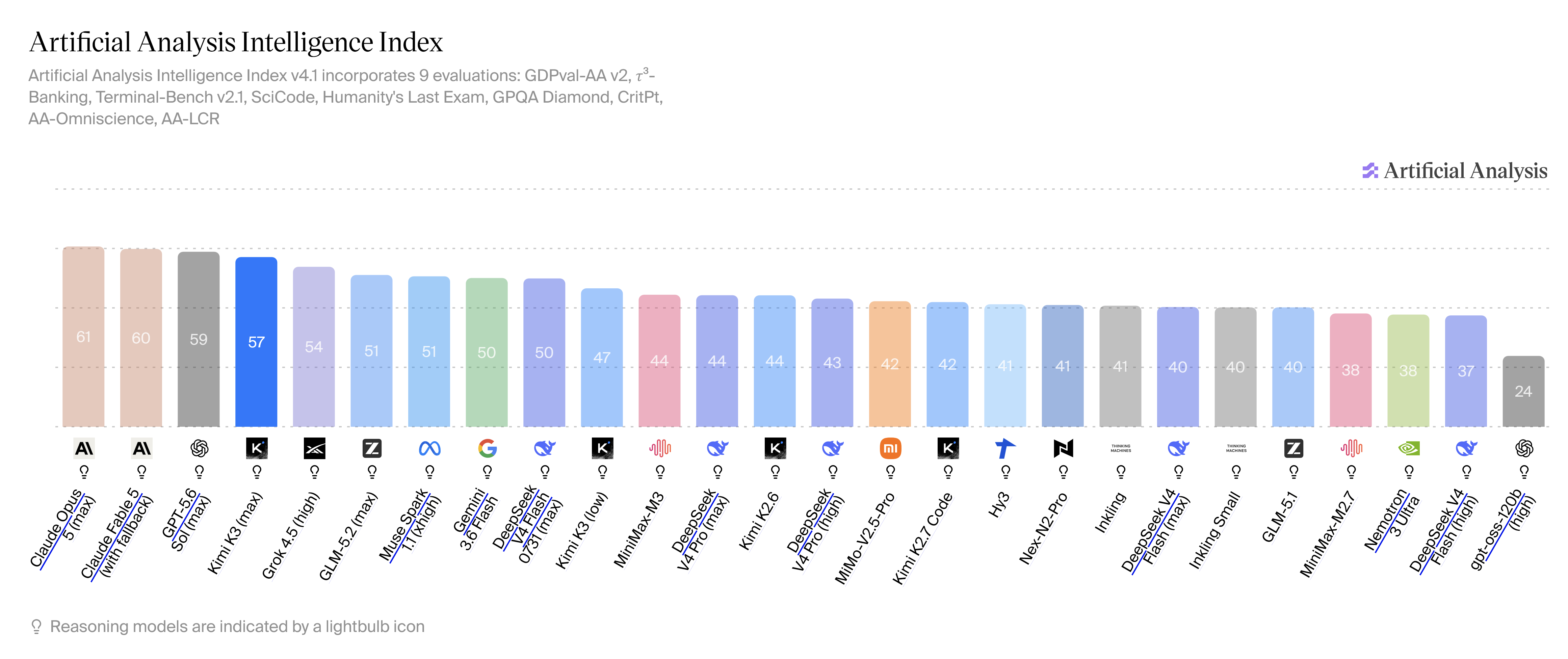
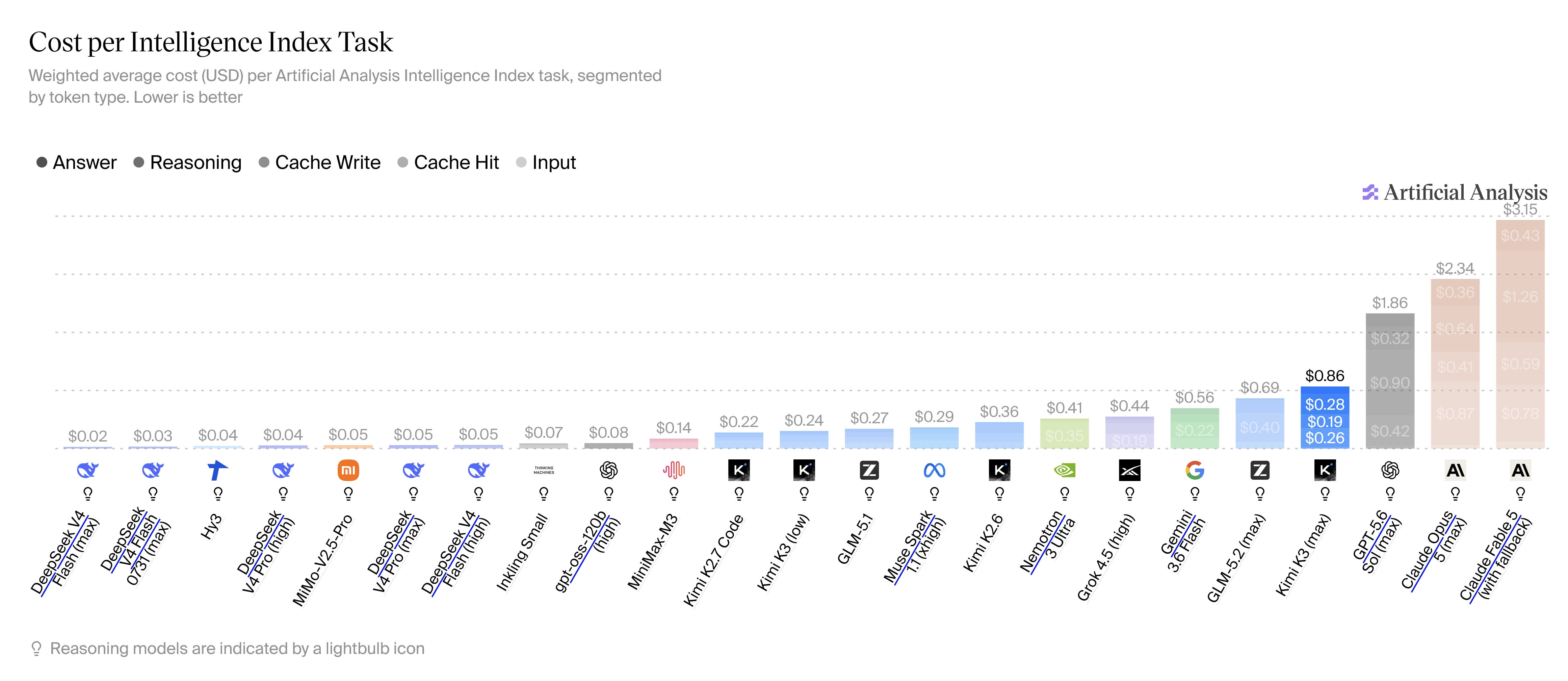
Focus on the Intelligence and Cost-per-Task charts. Notice how close the open models are to the frontier closed models. Yes, OpenAI’s and Anthropic’s models are faster, but the cost per task of these open models is substantially lower.
Let me stress this point: these are open models that can be installed on local servers, so they can’t be banned or politically restricted. They run without an internet connection, and all shared data stays private — no mandatory 30-day data retention.
Of course, the largest open models require dedicated hardware; you can’t install a 2.8-trillion-parameter model on a laptop. That said, quantized open models are increasingly popular and powerful, and can run on a decent laptop. But once the infrastructure is in place, it’s game on.
What about adoption? OpenRouter data (via Our World in Data) shows that Chinese models have made significant inroads.
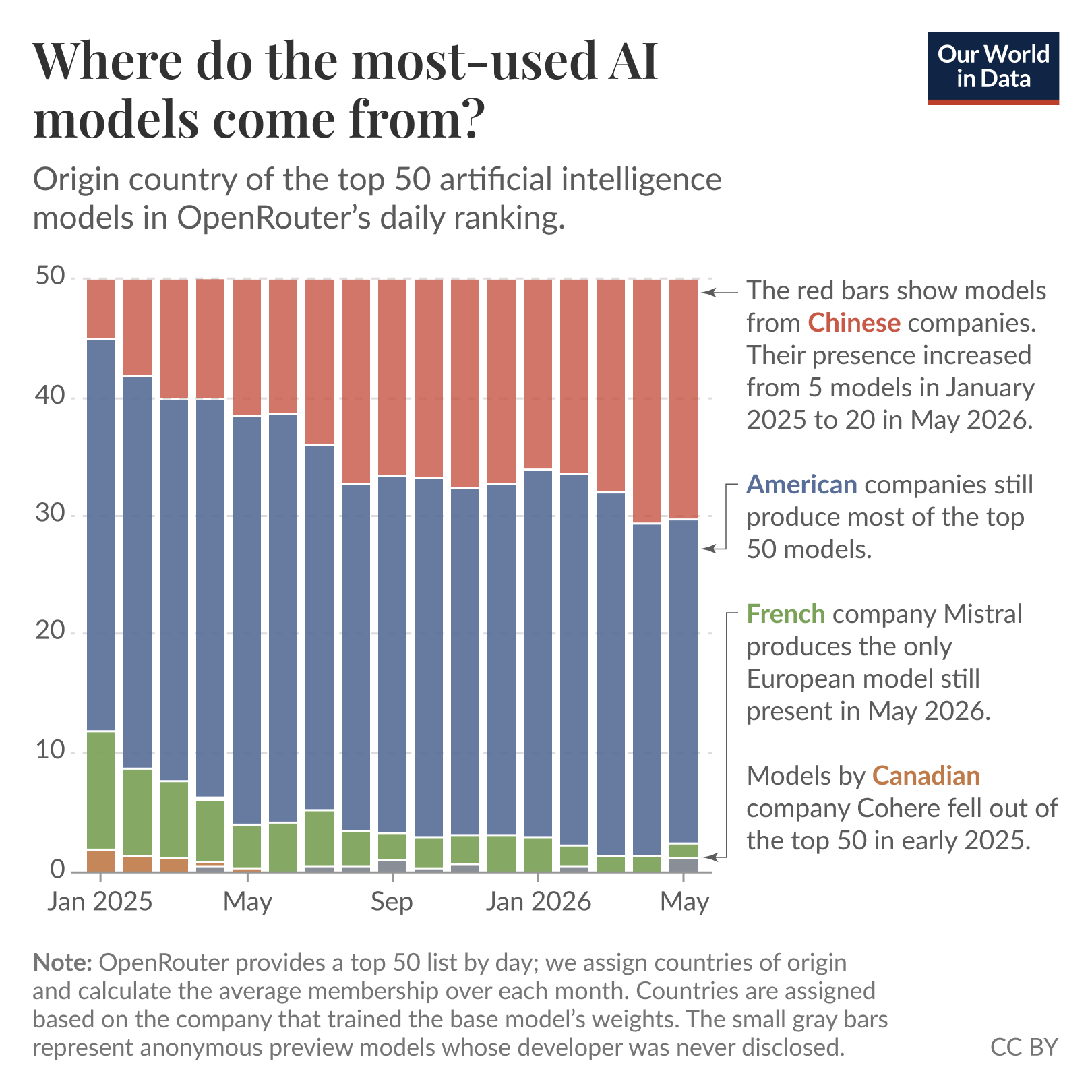
From what I can see, benchmarks and adoption data aren’t good news for American companies and their closed models — especially those planning an IPO.
The Financial Consideration
In my view, the combination of political headwinds and the closing performance gap in Chinese open models is bad news for Anthropic and OpenAI. Conversely, if you’re Nvidia, SK Hynix, or one of the specialized hardware companies supporting AI, this is very good news.
Both open and closed models need powerful hardware to run. As mentioned, a 2.8-trillion-parameter model needs dedicated hardware: fast AI chips and a lot of high-bandwidth memory (HBM) to handle trillions of parameters and large context windows.
Even running an open model on AWS or Google Cloud doesn’t change this — hyperscalers still need to make massive infrastructure investments to support demand.
In conclusion, I think users worldwide will keep exploring and adopting open models. Frontier US companies will feel real pain from the release and adoption of Chinese open frontier models, and this trend will benefit hardware companies across the AI ecosystem.
Of course, this analysis holds unless AI adoption stalls. I don’t have a crystal ball, but I’d bet AI is here to stay, and adoption will keep growing. The genie is out of the bottle; the productivity gains are still sparse, but real.
| https://fabiopizzuto.substack.com/p/geopolitics-and-the-ai-business-model |